
changing tradition
-
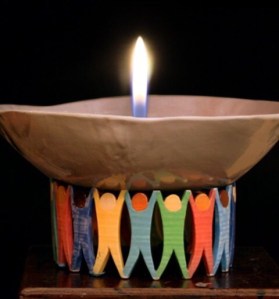
Old friends
Changing Paths challenge day 9 — old friends. Although Unitarianism * / Unitarian Universalism wasn’t my path, I still value many of their ideas and values. They’re green, they’re LGBT+ inclusive or at least welcoming, they were the first to ordain women ministers (the Universalists in 1860, the English Unitarians in 1904), among the first…
-
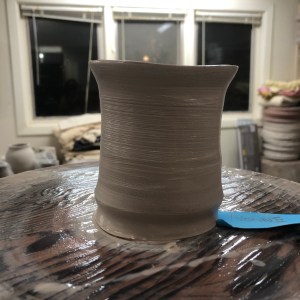
New friends
Changing Paths Challenge day 4 — new friends I’ve met some lovely new people in Canada — in the Wiccan and Pagan community, at pottery class and also Morris dancers. Plus we’ve joined a (secular) choir recently.
-
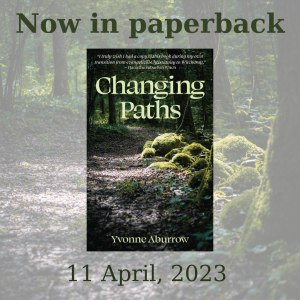
Paperback released today
Available wherever books are sold online.
-
Review by Steve Dee
A wonderful review by Steve Dee of Changing Paths is up at The Blog of Baphomet.
-

High glycemic religion
Religion can be divided into two types, high glycemic index and low glycemic index. High glycemic index gives you a big rush where everything seems really great and then you come down with a big crash afterwards. Low glycemic index is slow and steady, nourishes the soul, and keeps you going through the hard times.
-
Review from Suburban Witchery
I had a wonderful chat with Hana the Suburban Witch yesterday for her podcast, and today she has posted a wonderful review of Changing Paths (she was one of the advance readers and is quoted on the cover). “Changing Paths by Yvonne Aburrow is a down to earth and extremely practical book on the complexities…
-

Exvangelical podcasts
There’s a huge variety of exvangelical podcasts helping people deconstruct from toxic churches. Check out this list to discover some helpful ones.
-
Cover reveal
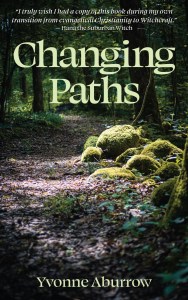
Changing Paths by Yvonne Aburrow will be published by 1000 Volt Press on 11 April, 2023. Stay tuned for preorder details.
-

Rise of the Nones
Interesting article by Adam Gabbatt in The Guardian exploring how the pandemic has accelerated a trend of church closures in the US: Losing their religion: why US churches are on the decline“As the US adjusts to an increasingly non-religious population, thousands of churches are closing each year – probably accelerated by Covid”
-

De-baptism
There’s been a discussion on the internet recently about de-baptism. Here’s an excellent article about it from John Beckett over at Patheos: Debaptism: You Probably Don’t Need It, But It Can Be Done …you can’t unpour water. The baptism happened and we can’t pretend it didn’t.But we can reverse its effects. John Beckett Further thoughts…
-

Old Maps No Longer Work
A poem about maps and paths and stars that was shared in a thread on Rabbi Danya Ruttenberg’s Substack, Life is a sacred text.
-

Repost: My spiritual journey
I came to terms with being gay in 1996. At the time I was an evangelical Christian and tried to keep my faith for two and a half years. It didn’t work. I realized that even if I accepted I was gay, my upbringing had taught me to hate myself and see myself as worthless…
-

A change of perspective
There was a guy in one of my classes — let’s call him Jonathan — who was openly gay. I had never knowingly interacted with, or even seen, anyone gay before. … He just stood and sang, a capella. It was honestly beautiful in its own right — Jonathan has a great voice. But, as…


 Changing Paths