
fundamentalism
-

Revelation and Ragnarök
One of the most misunderstood books in history, Revelation (or that third-rate misinterpretation of it, Left Behind) is often used to scare small children, and it is currently being used as a reason to attack Iran. So it seemed like a good moment to inquire into what it actually means.
-
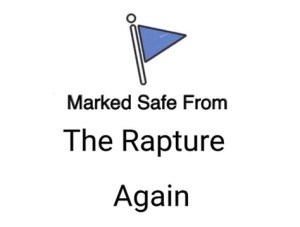
Rapping about the rapture
I’m thankful that I was not brought up with the nonsense about the rapture, but I recognize that it is still traumatic to think about for a lot of people.
-

Dealing with door knockers
My best ever riposte to some doorstep evangelists was when they asked me “who do you believe is the ruler of this Earth?” And I replied “I don’t believe the Earth can be ruled, I believe that she’s a goddess in her own right”. The doorstep evangelists practically ran away down the front path. The…
-

State funding removed from Norwegian JWs
In Norway, subject to rules about not being coercive or oppressive, all religious groups can apply for state funding. Due to the JWs’ practice of disfellowshipping and shunning people who leave, including children, the Norwegian government has removed their funding. Friendly Atheist: Norwegian court upholds ban on state funding of Jehovah’s Witnesses
-

What’s your focus?
Esoteric versus exoteric religions Esoteric religions are ones that locate the primary source of religious or spiritual authority in the human heart, the conscience, or the higher self. Teachers are seen more as guides than as authority figures. They are only an authority on the topic of the particular path, as they are further along…
-

Religious trauma workbook
I’m excited to see that Gillian Jenkinson’s book is out! Gillian Jenkinson is a therapist with extensive experience in helping people break free of harmful beliefs dinned into them by cults. I quoted her work in Changing Paths (my book) and I’ve been looking forward to her book coming out. It’s also very reasonably priced,…
-

Evangelicals harming uncontacted tribes
Sign the petition: pledge to support uncontacted tribes
-

Religions evolve
Oh dear: the evangelicals are spouting rubbish about Paganism again — ably debunked by John Beckett. The idea of evangelicals claiming that Paganisms don’t have continuity with ancient paganisms is hilarious when you consider the lack of continuity between evangelical Christianity and early Christianity.
-
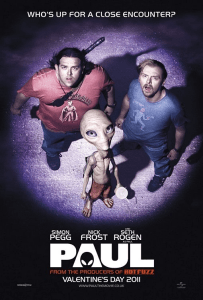
Paul (2011)
One of my favourite movies — it’s nerdy, it’s cute, it’s hilarious and a fundamentalist Christian gets exposed to the vastness of the universe and learns to swear.
-
Theological questions
Readers of Changing Paths may wonder why I chose not to address theological questions like the existence of God, what happens in the afterlife, and related questions. The first part of the book is aimed at people seeking to leave a variety of high-control traditions, which could be anything including fundamentalist Christianity, fundamentalist Islam, high-control…
-

Exvangelical podcasts
There’s a huge variety of exvangelical podcasts helping people deconstruct from toxic churches. Check out this list to discover some helpful ones.
-
Tattoos, anti-Semitism, and sexual abuse
The Walrus has a new article about the Meeting House, a Canadian mega church. Personally I find even the name triggering, as that’s what the Plymouth Brethren call their churches. So it’s kind of ironic that this one was meant to rise above the scandals of conventional churches.
-
I’d rather be “left behind”
There’s a good article in The Guardian today about the nasty psychological effects of being exposed to constant propaganda about the rapture and being “left behind”. Trigger warning if you’ve been exposed to that kind of bad theology. Thankfully I left the evangelical nonsense before the trend for making these movies happened.


 Changing Paths