We need to talk about miracles

There are many wonderful things that we could classify as miracles: the capacity for love, the beauty of a sunny morning, dew on roses, the ability to paint or compose a masterpiece, and many other natural wonders.

Many Pagans believe in healing energies and such; but we tend to regard them as supplementary to conventional medicine—not a replacement for it. We also believe that they are within Nature, and that one day science will be able to explain them.

Continue reading

What’s your focus?

Esoteric versus exoteric religions

Esoteric religions are ones that locate the primary source of religious or spiritual authority in the human heart, the conscience, or the higher self. Teachers are seen more as guides than as authority figures. They are only an authority on the topic of the particular path, as they are further along that path. Starhawk and the Quakers characterize this approach as “power from within” for the individual and “power-with” to describe the power-sharing approach of this type of group.

Exoteric religions are ones that locate the source of religious or spiritual authority outside the self, in religious texts which are often said to be divinely revealed. These texts are often interpreted by leaders within these religions, and those leaders tend to be given a lot of authority over their “flock”. Starhawk and the Quakers characterize this approach as “power-over”.

Continue reading

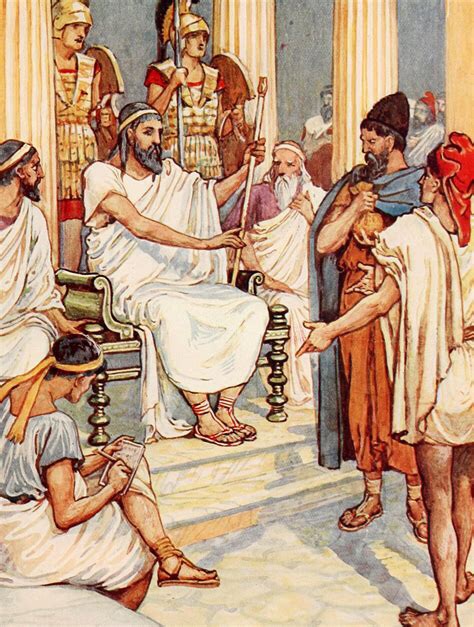
An alternative “10 commandments”

The “Ten Commandments” of Solon (as recorded in Diogenes Laertius’ “Lives of Eminent Philosophers”, 1.60), are as follows:

  1. Trust good character more than promises.
  2. Do not speak falsely.
  3. Do good things.
  4. Do not be hasty in making friends, but do not abandon them once made.
  5. Learn to obey before you command.
  6. When giving advice, do not recommend what is most pleasing, but what is most useful.
  7. Make reason your supreme commander.
  8. Do not associate with people who do bad things.
  9. Honor the gods.
  10. Have regard for your parents.

Hat-tip to Richard Carrier, from whom I learned about this list of “commandments”.

Art: “Solon the Wise Lawgiver of Athens” by Walter Crane

Religious trauma workbook

I’m excited to see that Gillian Jenkinson’s book is out! Gillian Jenkinson is a therapist with extensive experience in helping people break free of harmful beliefs dinned into them by cults. I quoted her work in Changing Paths (my book) and I’ve been looking forward to her book coming out.

It’s also very reasonably priced, presumably to make it accessible to those who need it.

Continue reading

Folk witches and dual faith

Polish Folk Witch (on instagram and Patreon) has an excellent article on dual faith practice and syncretism among folk witches: Dual Faith: the elephant in the room of the witchcraft community.

The topic of dual faith keeps returning on a regular basis in the broader witchcraft community online, especially on the intersection of folk magic, paganism and christian occultism.

Folk witches often practice some form of dual faith, developed based on the mixture their cultural background, religious background, as well as bioregional features and animistic immersion in the world around them. Each folk witch’s exact praxis will therefore vary.

—Joanna Wiedźma (Polish folk witch)

Read more

This reminded me of my articles on dual faith practice based on an essay I wrote for my masters degree.

Dual-faith practice (part 1 of 4)

Dual-faith practice (part 2 of 4)

Dual-faith practice (part 3 of 4)

Dual-faith practice (part 4 of 4)

And this article that I wrote about my personal experiences of practising more than one religion (not the same as syncretic practices):

Dharma and sangha

And here’s one that I wrote about my spiritual wobbles, which was the start of the process that gave rise to the book (Changing Paths):

Wobbling, But Not Falling Off