
The idea of evangelicals claiming that Paganisms don’t have continuity with ancient paganisms is hilarious when you consider the lack of continuity between evangelical Christianity and early Christianity.
Nowadays I am fairly and squarely a Pagan and an inclusive polytheist Wiccan, but one who has been enriched by my wobble.
I gained many good friends, sorted out my anger and fears, and learned new spiritual techniques and concepts.
I’ve written four books (All acts of love and pleasure: inclusive Wicca, Dark Mirror: the inner work of witchcraft, The Night Journey: Witchcraft as Transformation, and Changing Paths) since then and co-edited another (Pagan Consent Culture with Christine Hoff-Kraemer).
I’m still skeptical-but-open-minded. I’ve had spiritual experiences that were deeply satisfying and meaningful. At heart I’m an animist and a lover of flowers and trees and animals and birds. As I write, I can hear birds singing. And the singing will never be done.
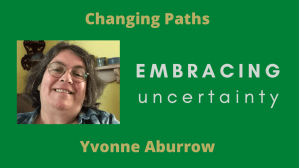
The goal of the book is to help you decide your own path by guiding you through the perils and pitfalls of the terrain, and asking questions to help you deepen your understanding of the reasons for your desire to change paths.
This was my local library when I was a kid. It’s where I discovered Greek mythology, The Little Prince by Antoine de Saint-Exupéry, Mary Stewart’s Arthurian trilogy, Robin Hood, Roger Lancelyn-Green, Geoffrey Trease, Henry Treece, and many more. I was introduced to Cynthia Harnett by a teacher at school but I am sure I borrowed some of her books from this library. I first learned about heraldry from Cynthia Harnett too.
The power of stories to change and challenge a person’s worldview is immense. My worldview was definitely informed by reading A Wizard of Earthsea by Ursula Le Guin, Tolkien’s The Hobbit and Lord of the Rings, The Writing on the Hearth by Cynthia Harnett (now sadly forgotten by most people), Mary Stewart’s Arthurian trilogy, and The Little Prince by Antoine de Saint Exupéry. And of course the Narnia series by CS Lewis, and many other books depicting a magical mythopoeic worldview. Ursula Le Guin’s science fiction was and remains extremely important to me.
I left Unitarianism in the end because of archetypes. The archetype that fits me the best is that of the witch, and it’s an archetype that sits uncomfortably in the Unitarian path. (The combination may work for others: didn’t work for me.)
I left Christianity because of its exclusivist views on salvation and the institutional homophobia.
And when I left Paganism for a while in 2007, it was because of it being excessively heterocentric / heteronormative, and other reasons too lengthy to get into here.
However, at the end of the day, you have to pick something (could be atheism, could agnosticism, could be a religion or spirituality) and make it work for you. I chose inclusive polytheist Wicca.
Well I’m not sure that Paganism is my “new” path any more as I’ve been a Pagan for 38 years now… but what keeps it fresh? Seeing the beauty of nature, and when humans interact with nature harmoniously. The changing round of the seasons. Seeing the trees burst into leaf and the flowers coming out every year.
Their candid discussion of how religious trauma is a catalyst for people to seek out more inclusive spaces, typically outside of Christianity, is so useful for so many people who are seeking out alternatives. I just felt so viscerally connected to that experience, having left the church due to it’s complicity in colonization, sexual abuse, and the truly incredible amounts of homophobic and patriarchal views. I, too, was taught liberation theology, but I really just want to be liberated from the dominant christian culture I am surrounded by.
Changing Paths is published by 1000Volt Press and is available from all the usual online stores. Ask your local bookseller or library to stock it!
The goal of the book is to help you decide your own path by guiding you through the perils and pitfalls of the terrain, and asking questions to help you deepen your understanding of the reasons for your desire to change paths.
The concept of patron deities in polytheism caused me a lot of trouble back in the day. I was on a polytheist mailing list and it seemed like everyone on the list had a patron deity who had approached them personally. They were also adamant that the deity approached them and not the other way around. So I thought I should have a patron deity. This left me uniquely vulnerable to what happened next.