
escaping fundamentalism
-

What’s your focus?
Esoteric versus exoteric religions Esoteric religions are ones that locate the primary source of religious or spiritual authority in the human heart, the conscience, or the higher self. Teachers are seen more as guides than as authority figures. They are only an authority on the topic of the particular path, as they are further along…
-
An alternative “10 commandments”
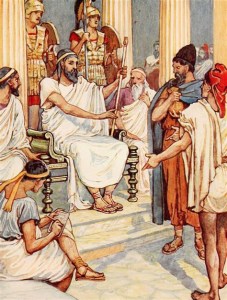
The “Ten Commandments” of Solon (as recorded in Diogenes Laertius’ “Lives of Eminent Philosophers”, 1.60), are as follows: Hat-tip to Richard Carrier, from whom I learned about this list of “commandments”. Art: “Solon the Wise Lawgiver of Athens” by Walter Crane
-
Religious trauma workbook
I’m excited to see that Gillian Jenkinson’s book is out! Gillian Jenkinson is a therapist with extensive experience in helping people break free of harmful beliefs dinned into them by cults. I quoted her work in Changing Paths (my book) and I’ve been looking forward to her book coming out. It’s also very reasonably priced,…
-

The exclusive Plymouth Brethren
This blog post was originally written in 2006 and posted on my old blog Nemeton. Some friends had asked why I tended to make statements about the awfulness of Christianity. Don’t be fooled by the cranky exterior of the Exclusive Brethren. They’re the religious equivalent of Vogons. I know because I was brought up in…
-

In The Magick Kitchen
Check out my conversation with the wonderful Elyse Wells (writer and podcast host) on The Magick Kitchen podcast, series 5, episode 9.
-
Evangelicals harming uncontacted tribes
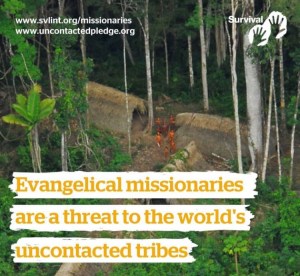
Sign the petition: pledge to support uncontacted tribes
-
Where I am now
Changing Paths challenge day 31 — where I am now Nowadays I am fairly and squarely a Pagan and an inclusive polytheist Wiccan, but one who has been enriched by my wobble. I gained many good friends, sorted out my anger and fears, and learned new spiritual techniques and concepts. I’ve written four books (All…
-
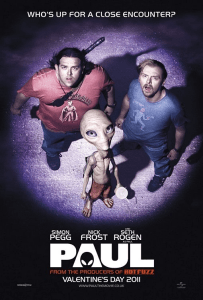
Paul (2011)
One of my favourite movies — it’s nerdy, it’s cute, it’s hilarious and a fundamentalist Christian gets exposed to the vastness of the universe and learns to swear.
-

Memories
Changing Paths challenge day 29—memories. One of my earliest memories is looking up at the constellation of Orion. I’ve always loved it. This amazing photo of Orion is from NASA’s Astronomy Picture of the Day. In the early days of the internet I used to visit this site every day. I should get back into…
-

Emotional vocabulary
Your emotional vocabulary matters! A better emotional vocabulary — all by itself — can help you develop better emotional skills! Researchers are finding that a better emotional vocabulary can help you identify, work with, and regulate your emotions. A rich vocabulary helps you understand yourself and the world around you, and it helps you understand…
-

Anger is valid
I said that anger is valid because it helps to propel us out of dangerous and abusive situations in Changing Paths (the book). I love that Jo Luehmann has talked about the neurological aspects of processing your anger in this post, and most importantly talking about it—absolutely brilliant. I think that if you turn anger…
-

To the library!
Changing Paths challenge 18 — throwback Thursday. This was my local library when I was a kid. It’s where I discovered Greek mythology, The Little Prince by Antoine de Saint-Exupéry, Mary Stewart’s Arthurian trilogy, Robin Hood, Roger Lancelyn-Green, Geoffrey Trease, Henry Treece, and many more. I was introduced to Cynthia Harnett by a teacher at…
-

Wibbly wobbly
Changing Paths challenge day 14: changing paths. Changing paths is a wibbly-wobbly thing. During the process, I was all over the place. It was like having the bends (you know, the thing where a diver rises too quickly to the surface and gets cramps) or being on a giant scary roller coaster ride. That’s why…
-
Smash that Protestant lens
Great piece from John Beckett this morning which covers some really good points about how to write about different religions, why the word “religion” should not be used as a synonym for Christianity, and how not all religions fit the “Protestant lens” (the way people tend to use the Protestant paradigm as a way to…
-

Old friends
Changing Paths challenge day 9 — old friends. Although Unitarianism * / Unitarian Universalism wasn’t my path, I still value many of their ideas and values. They’re green, they’re LGBT+ inclusive or at least welcoming, they were the first to ordain women ministers (the Universalists in 1860, the English Unitarians in 1904), among the first…
 Changing Paths