
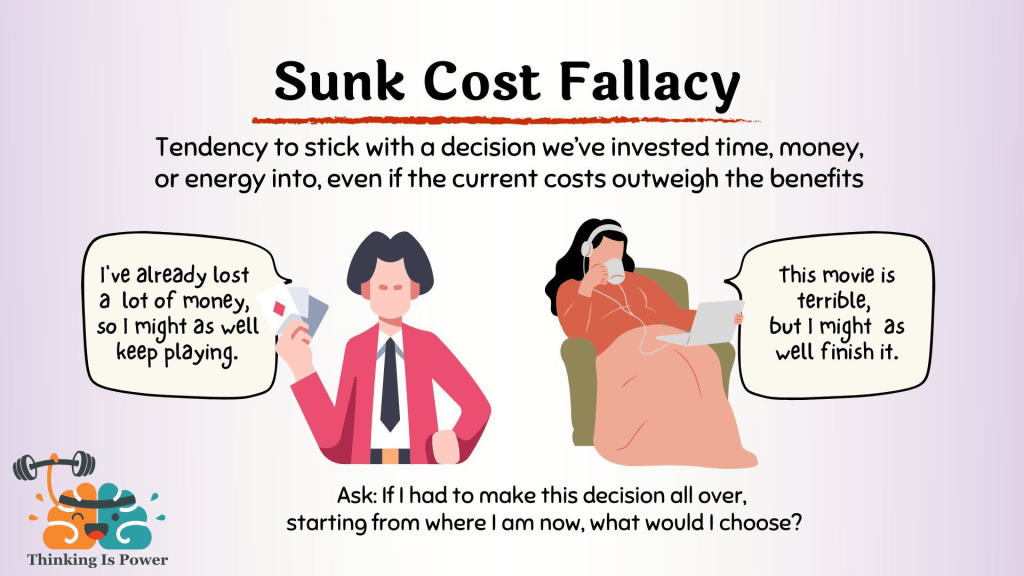
One of the reasons that people tend to stay in toxic relationships and religions, persist with failing projects, and even watch terrible movies all the way to the end, is the sunk cost fallacy.

I noticed that Richard Swan mentioned that one of the reasons he stayed in evangelical Christianity was because he had already invested so much time and effort in it, and he felt that effort would be wasted if he left. But in reality, it turned out that he was able to use some of the skills he had developed in a new and much more constructive way, as the director of a secular choir.

If you feel stuck in a toxic situation because of the sunk cost fallacy, try to reframe it by asking yourself what decision you would make now, knowing everything you know about the situation, if you had not invested the time that you have.
Make a list of the skills and knowledge you have gained from the situation that you are currently in, and how you could use those skills in another context. For example, I did a teaching qualification and a year as a newly qualified teacher. I did not stay in teaching, but I use the teaching and communication skills that I gained all the time.
Making a list of the benefits and costs of staying in your current situation, and the benefits and costs of leaving it. This exercise should clarify whether the costs of continuing on your current path outweigh the benefits.





 Changing Paths
Leave a comment